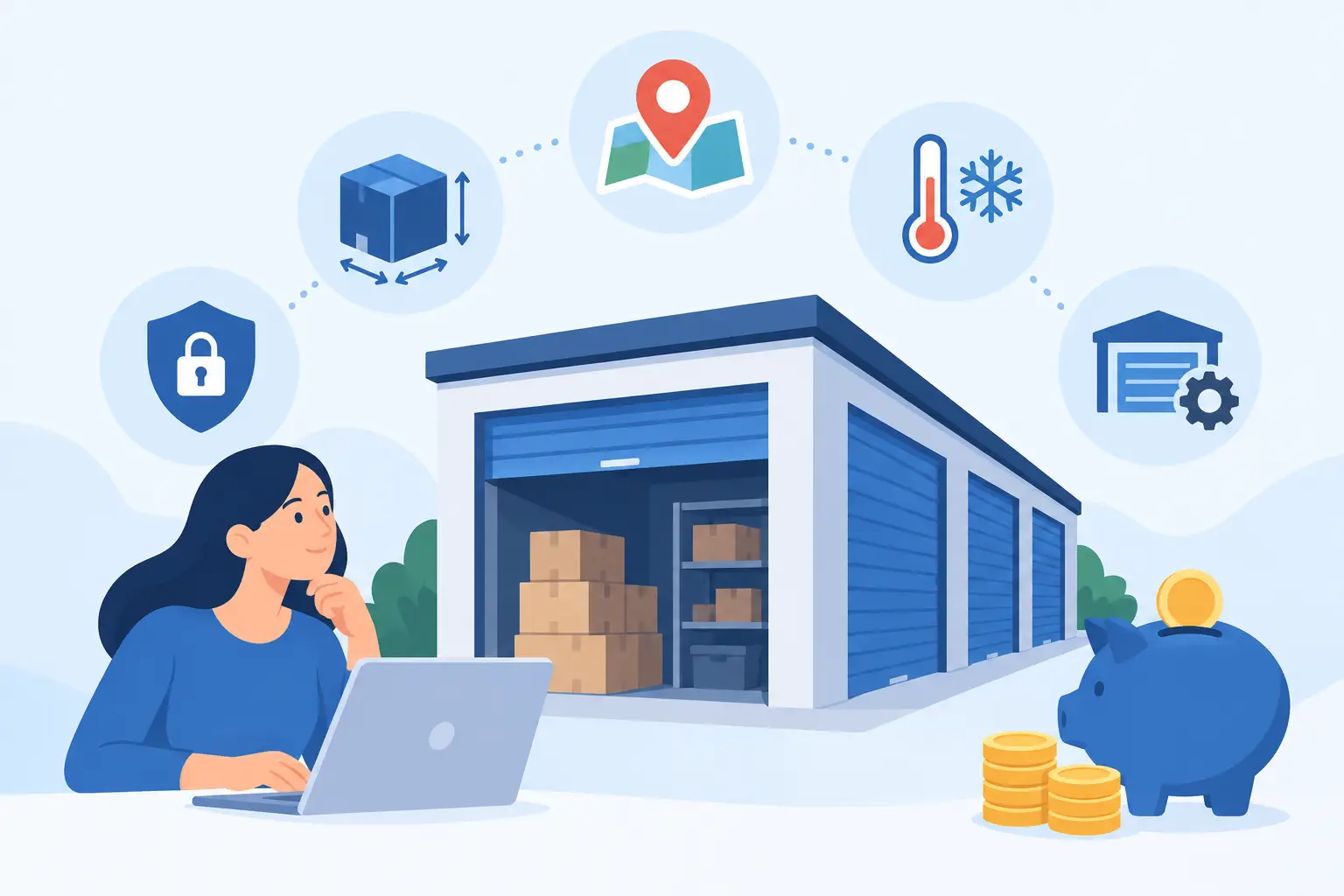
A storage unit should make a busy season easier, not leave you guessing about the monthly bill. Whether you are moving, clearing out a garage, handling an estate, or making room at home, understanding storage pricing helps you choose a unit that fits both your belongings and your budget.
The lowest advertised rate is not always the best value. A unit that is close to home, easy to pull up to, available when you need it, and protected by practical security features can save time and stress every month. The goal is simple: pay for the space and access you will actually use, without paying for more unit than you need.
Monthly storage rates are usually based on a few practical details: unit size, local demand, location, access, and facility features. Availability matters too. When a particular unit size is in short supply, its rate may be higher than a similar unit during a quieter period.
A clean, well-maintained property with gated entry, fencing, digital video surveillance, and regular upkeep may not be priced the same as a basic facility with fewer protections. That difference is worth considering if you are storing furniture, family keepsakes, tools, business supplies, or belongings you will need to access often.
The right choice depends on your situation. Someone storing a few boxes between apartment leases may only need a small unit for a short time. A family preparing for a move or renovation may need enough room for several rooms of furniture and appreciate the convenience of drive-up access.
Larger units generally cost more because they provide more square footage and hold more belongings. Before you rent, take a realistic inventory of what is going into storage. Include large items such as mattresses, sofas, appliances, lawn equipment, and shelving, not just boxes.
It is easy to rent too much space because an empty unit can look smaller than it is. On the other hand, choosing a unit that is too tight can make it difficult to stack safely or retrieve something from the back. A little planning helps you avoid both problems.
Think about how long you expect to store your items. For a short move, packing boxes tightly may make sense. For longer-term storage, leave a narrow path through the unit so you can reach important items without unloading everything at the door.
A drive-up unit lets you pull your vehicle directly to the door. For many renters, that convenience matters more than it might seem at first. Loading heavy furniture, moving multiple boxes, or picking up seasonal items is much easier when you are not carrying everything through a hallway or up an elevator.
Drive-up access can be especially useful for households in the middle of a move, military-connected families working around changing schedules, and anyone storing equipment they plan to use regularly. It may affect storage pricing, but it can also reduce the time and physical effort involved each time you visit.
If you expect to access your unit once or twice a year, a less convenient setup may be fine. If you will be stopping by often, easy vehicle access is usually a better fit.
Hours of access should be part of your comparison, especially if your schedule does not fit a standard workday. A storage unit is more useful when you can get to your belongings before work, after work, or on a weekend without having to rearrange your plans.
Twenty-four-hour tenant access gives you more flexibility when a move runs late, a family member needs an item, or you need to grab holiday decorations, tools, or paperwork. It does not mean every renter needs to visit at midnight. It means your storage space works around your life instead of creating another scheduling problem.
Location also affects value. A unit that is a few minutes from your home, job, or regular route may cost more than a facility farther away, but repeated long drives have a cost of their own. For Goldsboro-area renters, a convenient location near Highway 70 can make moving day and routine visits simpler.
When comparing storage options, ask what is included in the rental experience. A low starting rate can look appealing, but it is smart to understand the full cost before completing your reservation.
Ask about move-in charges, payment timing, deposits if applicable, lock requirements, insurance expectations, and any administrative fees. Clear answers are a good sign. You should know what you will pay to get started, what your normal monthly payment will be, and what happens if your needs change.
Price changes can also happen over time. Like rent, utilities, and other household expenses, storage rates may be adjusted based on operating costs and local market conditions. That does not automatically make a facility a poor choice. It simply means you should rent with a clear understanding of the terms rather than focusing only on a promotional rate.
A good storage provider makes this information straightforward. If you have a question, you should be able to get a direct answer from a real person instead of searching through a complicated system.
No facility can promise that nothing will ever happen, but practical security measures help create a more controlled place to store your belongings. Fully enclosed fencing, gated entry, digital video surveillance, and regular property maintenance all contribute to a facility that feels cared for and easier to use.
These features can influence pricing because they require equipment, monitoring, repairs, and ongoing attention. For renters, the value is peace of mind. You are not just renting four walls and a door. You are choosing where items from your home will sit for weeks, months, or longer.
If you are comparing two units with similar sizes and prices, consider the condition of the property. Look for clean grounds, clear access lanes, doors that appear to be in good shape, and signs that routine maintenance is being handled. A well-kept facility is often easier and more pleasant to use over time.
Start with your actual storage need, not the biggest unit you can afford. Make a quick list of the items going in, then group them by size and how often you will need them. Store mattresses and furniture upright when appropriate, use sturdy boxes that stack well, and place frequently needed items near the front.
Next, decide whether you need drive-up access and 24/7 entry. For many people, these are practical needs rather than extras. If you are coordinating movers, making several trips from a home, or working an unpredictable schedule, convenient access can be worth more than a small difference in monthly cost.
Finally, choose a facility where getting help is simple. Online rental and payment tools are useful when you want to reserve a unit quickly, but responsive local support matters when you have a billing question, need help selecting a size, or are preparing for move-in day.
At Goldsboro Self Storage, renters can handle the basics online while still having a local office manager available by text or phone. That combination keeps the process simple without making you feel like you are on your own.
Instead of asking only, “Which unit is cheapest?” ask, “Which unit will be easiest to use for as long as I need it?” Compare the size you need, the travel time, the access hours, the loading experience, the security measures, and the full move-in cost.
A slightly higher monthly rate may be the better value if it prevents extra trips, protects your belongings with sensible site controls, and gives you access when your schedule demands it. On the other hand, if you are storing a small number of boxes for a short period, a smaller unit with only the essentials may be exactly right.
The best storage decision is the one that gives you enough room, clear costs, and confidence that your belongings are in a clean, secure, local place. Take a few minutes to compare the details before renting, then choose the unit that makes the rest of your move or home project easier.