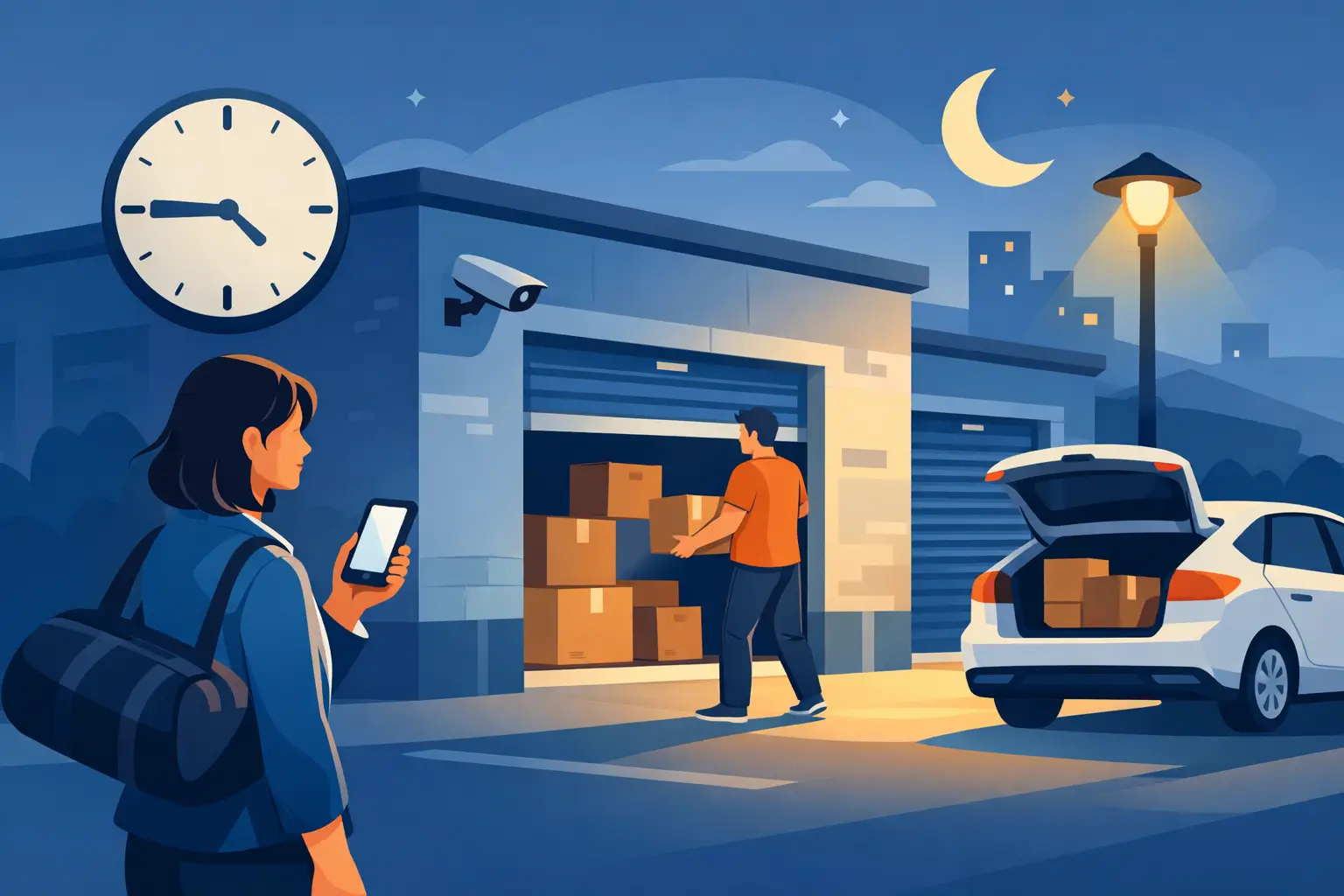
A storage unit is most useful when it works around your schedule, not the other way around. If you are asking, “can I access storage anytime,” the short answer is that it depends on the facility. Some locations limit gate hours, while others offer 24/7 tenant access so you can reach your belongings before work, after a move, or whenever a family project runs late.
For households around Goldsboro, flexible access can make a real difference. You may need to grab a box of work tools at 6 a.m., put away holiday decorations after dinner, or pick up furniture on a weekend when friends are available to help. Storage should take one task off your list, not create another appointment to keep.
At a facility with 24/7 tenant access, active renters can enter the property any time of day or night. Access is usually provided through a controlled gate, using a personal entry code or another secure method. Once inside, you can drive up to your unit, unlock it, and load or unload on your own schedule.
That does not mean every part of the business is open around the clock. The office may have separate hours for in-person questions, paperwork, or assistance. Your gate access, however, is designed for getting to your unit when you need it.
Goldsboro Self Storage offers 24/7 access for tenants, along with drive-up units that keep loading simple. Instead of carrying boxes down a long hallway or waiting for an elevator, you can pull your vehicle close to the unit door. For a quick pickup or a full moving day, that convenience adds up.
Most people do not rent storage because they have extra time. They rent it because something is changing: a move, a renovation, a new baby, an inherited collection of furniture, a college semester, or a military-related transition. Those moments rarely fit neatly between 9 and 5.
A renter moving from an apartment may not get possession of a new home until late in the afternoon. A homeowner clearing a spare room may only have Saturday morning to sort through boxes. Someone helping a parent downsize may need to make several short trips around work and family commitments. Around-the-clock unit access gives you room to handle those jobs at a pace that makes sense.
It is also useful for ordinary storage needs. Seasonal decorations, lawn equipment, camping gear, extra kitchen items, and family keepsakes do not need to take over the garage or guest room. When those items are close by and available when you need them, storage becomes part of keeping your home easier to manage.
Convenient access should still be controlled access. A good self-storage facility does not leave its gates wide open for anyone to enter at any hour. Instead, tenants use the gate entry system to access the fenced property.
At Goldsboro Self Storage, the facility is fully enclosed by fencing, has gated entry, and uses digital video surveillance. These features are there to help provide a more secure environment for your stored belongings while allowing renters to come and go as needed.
Your own habits matter too. Keep your gate code private, lock your unit every time you leave, and make sure the door is fully closed before driving away. Choose a quality lock that fits the unit door properly. If you are sharing access with a family member, decide who needs the code and avoid passing it around casually.
Security features reduce risk, but no storage facility can promise that nothing will ever happen. It is smart to check whether your homeowners or renters insurance covers belongings in storage, or whether you need separate coverage. Take a few photos of valuable items before storing them and keep a simple inventory in your phone or files.
Even when a facility advertises 24-hour access, there can be reasonable exceptions. Your account generally needs to be current and in good standing for gate access to remain active. If a payment issue comes up, contact the facility promptly rather than waiting until you need to enter the gate.
There may also be occasional temporary restrictions for emergency repairs, severe weather, safety concerns, or required maintenance. These situations are not common, but they are worth understanding before you rent. A locally managed facility should communicate clearly if an issue affects access.
Access also depends on using the property safely and following the rental agreement. Storage units are meant for storing belongings, not for living or working inside the unit. Do not store hazardous materials, illegal items, or anything that could create a fire, pest, or safety problem for neighboring renters.
If you expect frequent late-night trips, ask how gate entry works before booking. You will want to know when you receive your code, whether there are instructions for first-time entry, and who to contact if you have trouble getting in. A responsive local manager can make a small problem much less stressful.
24/7 access is especially helpful when each trip is quick and organized. Before heading to your unit, make a short note of what you need to take or retrieve. This saves you from opening every box while standing in the driveway.
Place items you expect to use often near the front of the unit. Seasonal items can go toward the back, while work equipment, moving supplies, or household basics should stay within easy reach. Leave a narrow walkway down the center if your unit holds more than a few boxes. You will be glad you did when you need one specific item months later.
For a larger load, use sturdy boxes, label more than one side, and keep heavier items on the bottom. Protect furniture with covers or moving blankets, especially if it will be stored for an extended period. Avoid packing the unit so tightly that a single visit turns into a complete unload.
Drive-up access makes these habits easier to put into practice. Pull up, open the unit, handle what you came for, and get back to your day. That is a better experience than making storage feel like an all-day project.
Sometimes the need for storage comes with almost no warning. A closing date changes. A lease ends. A family member needs help clearing space. In those cases, being able to rent online and manage your account digitally can save valuable time.
Before reserving a unit, think about what you are storing and how often you will need to visit. A smaller unit may work for boxed household goods or a few pieces of furniture. A larger space may be a better fit for a roomful of belongings, business overflow, or equipment you need to reach regularly. Choosing a little extra aisle space can be worthwhile if access is a priority.
It also helps to measure large furniture and make a quick list before selecting a unit. The goal is not to pay for space you will not use, but to avoid cramming items into a unit that leaves no room to move. If you are unsure, direct local support can help you think through the practical fit.
Storage access should give you flexibility when life gets crowded. Choose a clean, secure location with hours that match your routine, keep your account current, and organize your unit so every visit has a purpose. Then, whether you need one box at sunrise or a truckload after work, your belongings are there when you are ready for them.