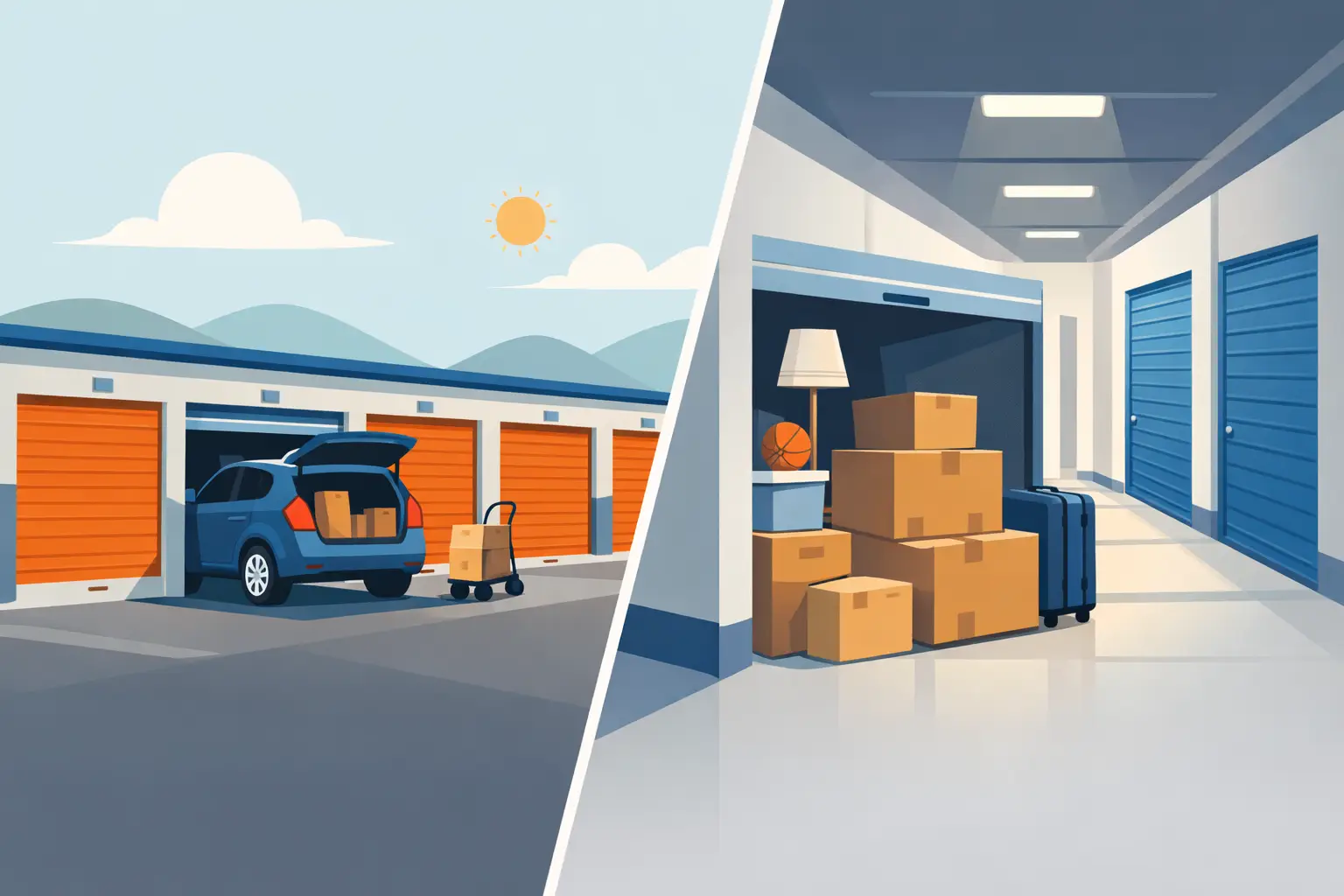
A storage unit can make a move, home project, or family cleanup feel manageable again. But before you choose a size, consider how you will use the space. The choice between drive-up versus indoor storage often comes down to one practical question: Do you need to pull your vehicle right up to your belongings, or do you need an extra layer of protection from the weather?
For many Goldsboro households, the answer is not complicated. If you expect to visit often, move larger items, or want the quickest possible loading experience, drive-up storage is usually the better fit. Indoor storage can be worthwhile when your belongings are especially sensitive to temperature changes, dust, or humidity. Here is how to make the call with confidence.
A drive-up storage unit sits at ground level with a roll-up door facing a wide drive lane. You pull your car, truck, trailer, or moving van alongside the unit and load or unload directly from the vehicle. There are no interior hallways, elevators, or long trips with a cart.
That setup saves time when you are moving a sofa, mattress, appliances, boxes of books, lawn equipment, or the contents of a garage. It also makes a difference for customers who need to stop by regularly. If you run a small local business, rotate seasonal decorations, or keep tools and equipment outside the house, easy vehicle access can turn a storage visit from a chore into a quick stop.
Drive-up units work especially well for common life changes: moving between homes, clearing space before a renovation, helping a student move, handling an inherited household, or storing belongings during a military-related transition. The key benefit is simple: less carrying, less time, and fewer awkward trips across a building.
Indoor storage units are located inside a larger building. Depending on the facility, renters may enter through a main door, use a hallway, and transport items to the unit. Some indoor options are climate-controlled, meaning the space is designed to reduce major swings in temperature and humidity.
That added environment can make sense for belongings that do not handle heat, cold, or moisture well. Examples include wood furniture with delicate finishes, photographs, paper records, electronics, artwork, musical instruments, and certain collectibles. If you are storing these items for a long period and their condition is a top concern, ask whether climate control is available and whether it matches what you are storing.
Indoor storage is not automatically the right answer for every box or piece of furniture. It can cost more, and the loading process may take longer. If your stored items are sturdy household goods and you need regular access, the convenience of a drive-up unit may matter more than an interior location.
The biggest difference is not the door. It is the experience every time you visit.
With drive-up storage, you can back a truck close to the unit, open the door, and get to work. That is helpful on moving day, when friends or family are lending a hand and every extra trip adds time. It is also easier when you are storing heavy or bulky items that should not be carried through corridors.
Indoor storage can require more planning. You may need to park in a designated area, bring items through an entrance, and use a hallway or elevator. That extra effort may be perfectly reasonable for a few boxes or sensitive items. It is less appealing when you are unloading a full pickup bed in summer heat or grabbing a set of tires, yard tools, or holiday bins before the weekend.
Think honestly about the frequency of your visits. A unit you access once a year can work differently from one you plan to use every month. Convenient access is not a minor feature when storage becomes part of your routine.
Size matters, but the type of belongings matters just as much. A drive-up unit is often a practical home for durable items such as furniture, boxed household goods, sporting equipment, bicycles, tools, patio items, and non-perishable business supplies. It is also a strong choice for temporary storage during a move because loading is fast.
For any storage unit, pack carefully. Use sturdy boxes, label each side, and keep frequently needed items near the front. Cover furniture, avoid putting wet items into storage, and leave a small walkway if you expect to retrieve things before moving out. Elevating boxes slightly off the floor can provide additional peace of mind, particularly for long-term storage.
If you are storing items that are irreplaceable or highly sensitive to environmental conditions, indoor climate-controlled storage may be worth the added cost and less direct access. A quick inventory before renting can prevent you from paying for features you do not need or choosing a unit that does not suit your most valuable items.
Whether a unit is drive-up or indoors, look beyond the building style. Ask how tenants enter the property, whether the facility is fully fenced, whether video surveillance is in place, and whether the grounds are clean and regularly maintained. These basics help you feel more comfortable leaving belongings off-site.
Access hours also matter. A unit is only convenient if you can reach it when life allows. Twenty-four-hour tenant access can be especially helpful for people working changing shifts, coordinating a move after work, or handling an unexpected need at home. It gives you flexibility without making you rearrange your whole day around office hours.
At Goldsboro Self Storage, drive-up units pair that straightforward loading experience with gated entry, enclosed fencing, digital video surveillance, and 24/7 tenant access. Online rental and payment tools keep the process simple, while a local office manager is available by phone or text when you need a real person to help.
Indoor storage, especially climate-controlled space, often carries a higher monthly price than a standard drive-up unit. That difference can be reasonable if it protects belongings that would be expensive or impossible to replace. Still, the lowest or highest rate alone should not decide the issue.
Consider the cost of your time and the number of trips you expect to make. Renting a slightly larger drive-up unit may be a better value than squeezing everything into an indoor unit that requires difficult loading and leaves no room to reach what you need. On the other hand, paying more for a protected interior setting can be a wise choice for a smaller collection of delicate possessions.
It depends on your situation. A family storing a living room set for two months during a move may prioritize direct access. Someone storing family photos and antique wood pieces for a year may put more weight on environmental protection.
Choose drive-up storage if you want to load directly from a vehicle, expect frequent visits, have large or heavy items, or are storing durable household goods during a move or cleanup. It is the practical choice when speed and easy access are at the top of your list.
Choose indoor storage if climate control is available and you are storing items that may be affected by heat, cold, humidity, or dust. It may also suit you if you have a smaller number of boxes and do not mind carrying them through an interior building.
Before reserving, picture your first visit and your last one. Will you be unloading a moving truck? Will you need to pull out camping gear, files, or seasonal bins on short notice? Will your belongings sit untouched for months? Those answers usually point clearly toward the right space.
The best storage unit is the one that makes your next step easier. Choose a clean, secure space you can access comfortably, pack it with a plan, and give yourself back the room to handle what comes next.