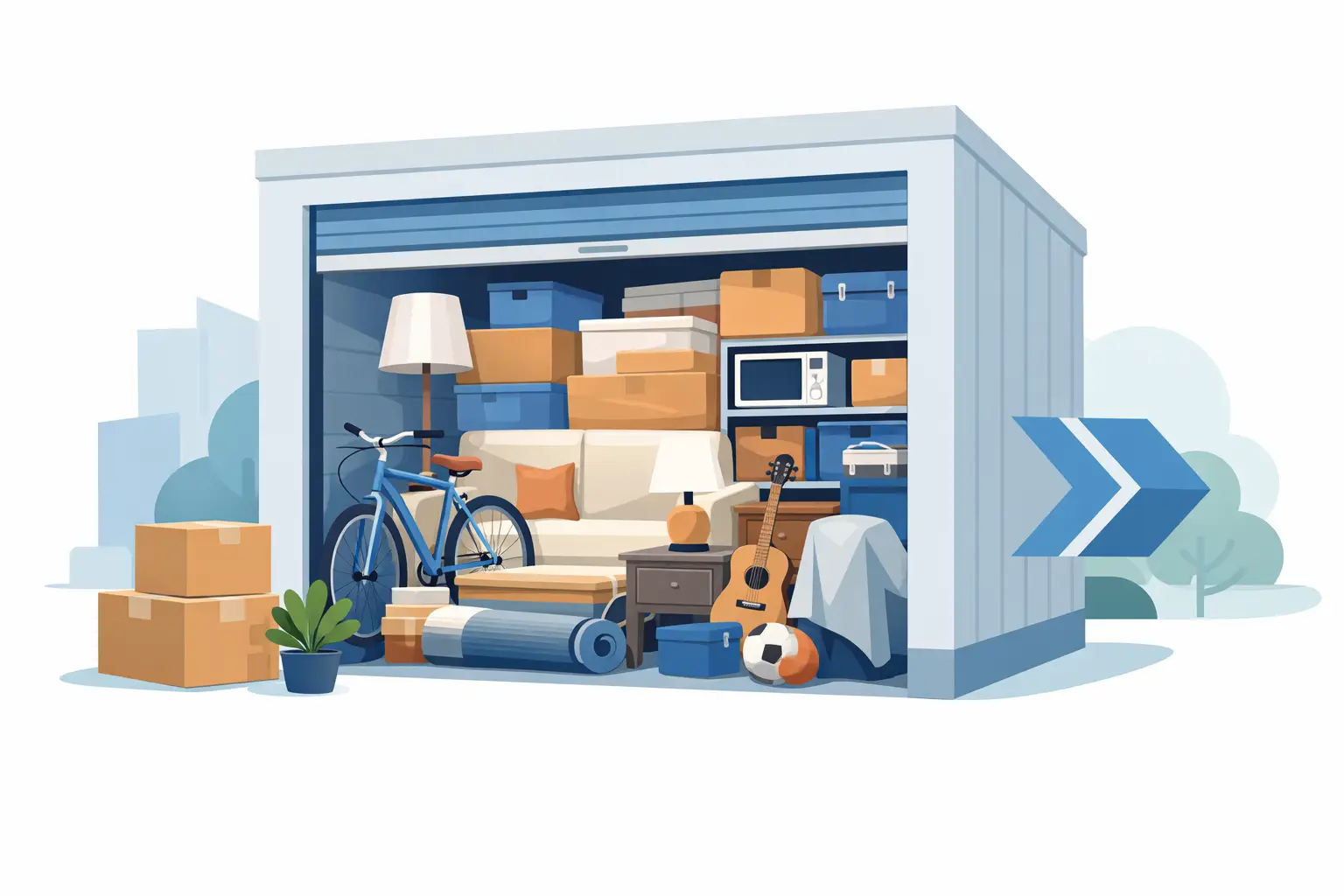
A 10x10 storage unit is often the right answer when a spare bedroom, garage corner, or hallway has become the holding place for everything that does not fit at home. If you are asking what fits in a 10x10 unit, picture about 100 square feet of floor space - roughly the size of a small bedroom. With smart stacking and a clear access path, it can hold the contents of a one-bedroom apartment or several rooms of household overflow.
The exact amount depends on what you are storing, how high the unit is, and whether you need to reach items regularly. A unit filled with neatly packed boxes uses space very differently than one holding oversized furniture, lawn equipment, or a collection of family keepsakes.
A 10x10 unit is 10 feet wide by 10 feet deep. Most units also have enough vertical space to stack boxes and lightweight household items safely, but ceiling heights can vary. Before planning a tightly packed load, confirm the unit height and any facility-specific requirements.
For many households, this size can accommodate furniture and boxes from a one-bedroom apartment, including a bedroom set, living room furniture, a dining table and chairs, small appliances, and packed cartons. It can also work well for a homeowner clearing out one or two rooms during a renovation, a family sorting inherited belongings, or a student storing apartment furnishings between leases.
A typical 10x10 load might include a queen mattress and bed frame, a dresser, nightstands, a sofa, an armchair, a coffee table, a dining table with chairs, a television stand, and 25 to 50 boxes. That is a useful estimate, not a promise. A sectional sofa, large entertainment center, oversized recliner, or heavy amount of garage equipment can change the fit quickly.
This unit size is practical when you need more than a closet-sized space but do not need to store an entire multi-bedroom home. It gives you room to protect furniture rather than forcing it into a crowded space, and it leaves enough floor area to organize a thoughtful load.
A 10x10 is a common choice for renters moving between homes, waiting on a new lease, or temporarily staying with family. It can hold the main furniture from a one-bedroom apartment, along with kitchen boxes, clothing, decor, and smaller household items.
If you are storing every item from an apartment with a large sectional, multiple bookcases, a washer and dryer, or a packed patio, consider whether a larger unit would save time and frustration. Choosing slightly more space can be worthwhile when you need regular access to your things.
Painting, replacing floors, repairing water damage, or preparing a house to sell often means moving furniture out of the way. A 10x10 unit can handle the contents of a bedroom, office, dining room, or several closets while work is underway.
For this use, accessibility matters. You may need to retrieve a lamp, a document box, or a piece of furniture before the project is finished. Leave a narrow walkway down the center or along one side instead of filling every inch from the door inward.
A growing family can fill a home faster than expected. Baby gear, holiday decorations, sports equipment, extra chairs, bins of clothing, and boxes of sentimental items all add up. A 10x10 gives that overflow a separate, organized place without requiring you to give up the items you may use again.
It is also a sensible size for people handling an estate or inherited belongings. There is room to sort deliberately rather than making quick decisions under pressure. Label boxes clearly and keep important papers, photographs, and smaller valuables together where you can find them easily.
The way you load a storage unit matters almost as much as its size. Start by placing heavy, sturdy pieces along the walls and toward the back. Dressers, appliances, tables, and bookcases can create a stable base for lighter boxes and soft items.
Disassemble furniture when it makes sense. Remove table legs, break down bed frames, and keep hardware in labeled bags taped securely to the matching item. Stand mattresses and mirrors upright along a wall, using mattress covers and protective padding to keep them clean and prevent damage.
Use boxes that stack evenly whenever possible. A mix of loose bags, weak boxes, and odd-shaped containers creates gaps and can make a unit harder to access. Place the heaviest cartons on the bottom, keep labels facing outward, and do not stack so high that boxes become unstable.
A few packing habits make a noticeable difference:
Avoid packing the unit wall to wall if you expect to visit it often. A narrow aisle may reduce total capacity a little, but it saves you from unloading half the unit to find one box.
A 10x10 is versatile, but it has limits. It may feel crowded if you are storing the complete contents of a two- or three-bedroom home, especially with multiple large bedroom sets, major appliances, and bulky living room furniture. It may also be too small for a business storing inventory that needs frequent picking and restocking.
Large equipment deserves special consideration. Riding mowers, full-size motorcycles, workshop tools, and unusually long items can take up more floor space than expected. Measure the item at its widest point, including handles or attachments, before choosing a unit.
You should also think about what should not go into a storage unit. Perishable food, hazardous materials, fuel, propane tanks, fireworks, and illegal items are not appropriate for storage. Sensitive documents, irreplaceable photos, and valuables may need additional protection based on their condition and your needs.
For a 10x10 unit holding furniture and heavier boxes, drive-up access can make move-in much simpler. Instead of carrying a couch or stack of cartons through a long hallway, you can pull your vehicle close to the unit and unload directly.
That convenience also helps when you need something later. At Goldsboro Self Storage, drive-up units and 24/7 tenant access are designed for the practical reality of storage: you may be moving after work, sorting a family home on a weekend, or picking up seasonal items when your schedule allows.
Security should be part of the decision as well. A fully fenced property, gated entry, digital video surveillance, and routine maintenance all help you feel more comfortable leaving your belongings off-site. Good packing still matters, but a clean, well-kept facility gives your items a better place to stay.
Make a rough list of your largest items first, then count your boxes honestly. If your list looks like one bedroom set, a sofa, a few tables, several chairs, and a manageable stack of cartons, a 10x10 is likely a strong fit. If it includes the contents of several rooms or bulky equipment, give yourself extra room.
It is usually easier to rent a little more space than to discover on moving day that your final pieces will not fit. Measure your largest furniture, pack boxes before move-in when possible, and leave an aisle if you will need regular access. The right unit should make life feel less crowded, not create one more thing to work around.