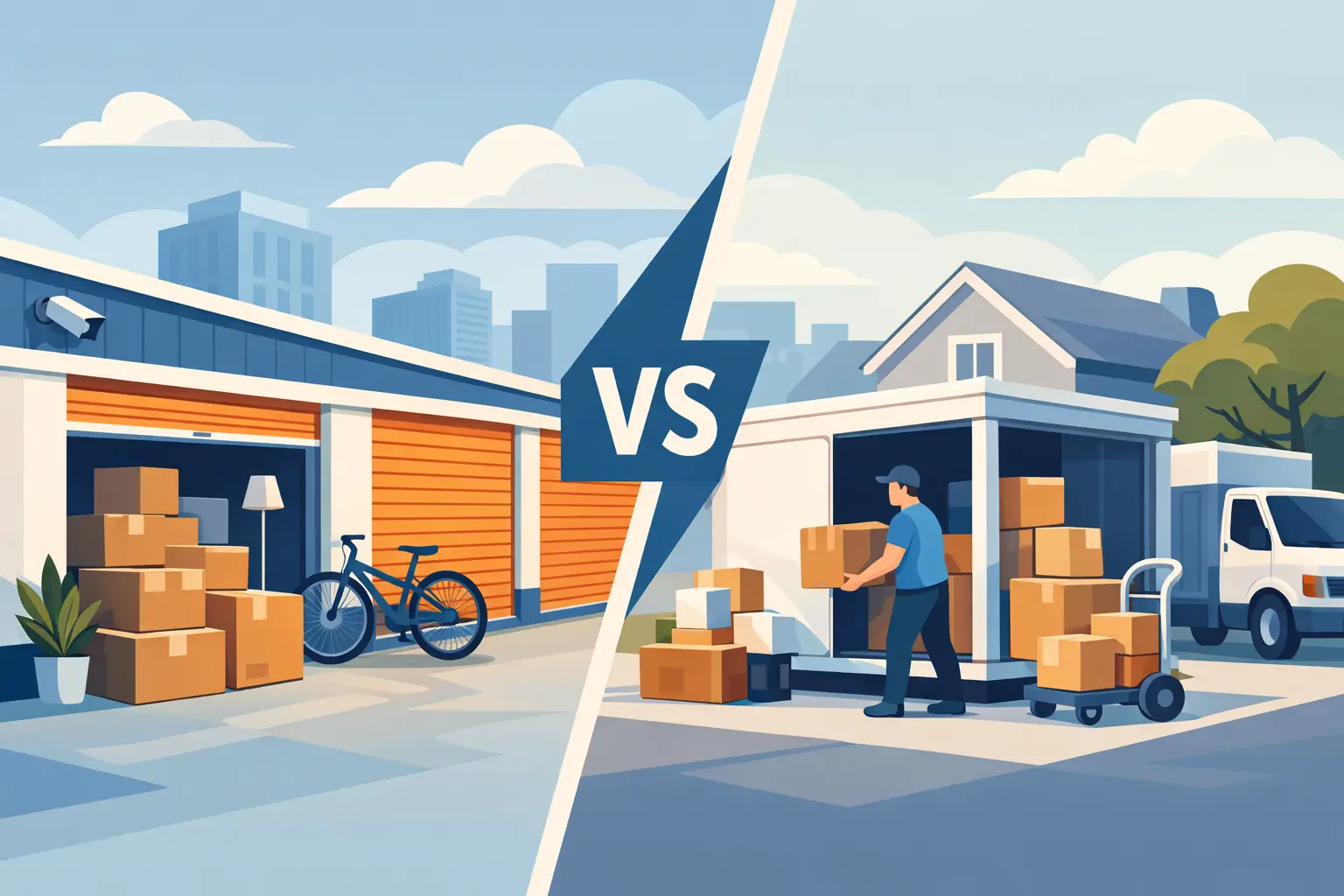
A packed living room can make any storage choice feel urgent. When you are between homes, clearing space for a renovation, or sorting through a family member's belongings, self storage versus moving pods is a practical decision with different costs, access rules, and responsibilities behind it.
Moving pods can be useful when your belongings need to travel from one address to another. A local self-storage unit is often the better fit when you need dependable space nearby and want to visit your things on your own schedule. The right answer depends on what you are storing, how long you need the space, and whether the move itself is part of the problem.
How self storage versus moving pods works
A self-storage unit is a fixed space at a storage facility. You bring your belongings to the unit, load them, lock up, and return when needed. With a drive-up unit, you can pull a vehicle close to the door, which makes boxes, furniture, tools, and seasonal items easier to handle.
A moving pod is a portable container delivered to your home. You load it where it sits, then the provider may pick it up to transport it to another address or keep it at a storage yard. That delivery-and-transport model is the main reason people choose a pod.
The difference matters because a pod is built around a move, while self storage is built around access. If you are moving from Goldsboro to another city and want one container to carry your belongings there, a pod may reduce some of the back-and-forth. If you need to clear out a garage, keep furniture during a home project, or store items you may need next week, a nearby unit usually makes daily life simpler.
When a moving pod makes sense
Moving pods are most useful for a long-distance move, especially if you have enough belongings to fill a container and do not want to drive a large rental truck. You load once at your current home, and the provider handles the transportation to your new location or a storage facility.
They can also help when the timing between homes is uncertain. For example, if a closing date shifts or your new lease starts later than expected, having a container moved into provider storage can keep your belongings together until you are ready.
Still, there are details worth checking before you book. A pod needs a safe, legal place to sit while you load it. Some neighborhoods, apartment complexes, homeowners associations, and streets have rules about portable containers, parking, or how long one can remain in place. Tight driveways, steep lots, and busy roads can create problems too.
Access can be another limitation. Once the container is picked up, you may not be able to visit it whenever you want. Some providers require appointments, charge for redelivery, or make stored containers available only during certain hours. That may be fine for a sealed household move. It is less convenient if you expect to retrieve camping gear, work equipment, documents, or a specific piece of furniture.
When self storage is the better choice
Self storage is usually the practical choice when your belongings are staying in the same area and you want to control when you access them. You can bring items in gradually instead of packing an entire household on one delivery schedule. That is valuable during a renovation, downsizing project, estate cleanout, or move that is happening in stages.
For Goldsboro households, drive-up access can make a real difference. Rather than carrying heavy items through a hallway or waiting on a container pickup, you can pull up, unload, and get on with your day. It is a straightforward setup for furniture, boxed household goods, lawn equipment, holiday decorations, student belongings, and overflow from a crowded home.
Access is the strongest reason to choose a local unit. At Goldsboro Self Storage, tenants have 24/7 access, so a last-minute need does not have to wait for a delivery window or business-day appointment. The facility also has gated entry, digital video surveillance, enclosed fencing, and regular maintenance to help customers feel more comfortable leaving belongings off-site.
A storage unit also gives you more flexibility if your needs change. You may start by storing a few rooms while you paint or replace flooring, then add more as you organize. When your project ends, you can move items out on your own timeline rather than coordinating container pickup and delivery.
Compare the real costs, not just the monthly price
It is easy to compare a pod's advertised price with a storage unit's monthly rent and assume the lower number wins. The better comparison includes every part of the job.
With a moving pod, ask about delivery, pickup, transportation, fuel-related charges, storage at the provider's location, and fees to access or redeliver the container. Long-distance transportation may be worthwhile when it replaces a truck rental and a long drive. For local storage, those added charges can make a pod more expensive than expected.
With self storage, the main cost is generally the monthly unit rental, plus any one-time move-in requirements. You handle transportation yourself, but that can be as simple as using your own vehicle for smaller loads or renting a truck for one afternoon. A drive-up unit often saves labor because there are fewer long carries between the vehicle and your space.
Duration changes the math, too. A pod may make sense for a short move with a defined pickup date. For several months of storage, especially when you need regular access, a local unit can offer better value and fewer service fees. Always ask for the full estimate, including taxes, delivery charges, and any minimum rental period.
Think about access before you pack
Before choosing either option, make a quick list of what you might need during storage. If the answer includes files, baby gear, seasonal clothing, tools, hobby supplies, or items you may sell or donate, choose a solution you can reach easily.
A pod works best when you can pack it, close the door, and leave it alone until move-in day. A self-storage unit works best when your stored belongings are part of an ongoing project or your home simply needs more breathing room.
How you pack matters in both cases. Keep mattresses and upholstered furniture covered, use sturdy boxes, and label more than one side of each box. Put heavier boxes on the bottom and leave a narrow path if you expect to retrieve items. Do not store flammable materials, perishable food, or anything prohibited by your rental agreement.
Choose based on your next step
If your next step is crossing state lines or moving a full household to a new address, a moving pod deserves a close look. It can simplify transportation and reduce the need to unload and reload everything into another truck.
If your next step is creating room at home, finishing a local move, or managing an uncertain timeline, self storage is usually the easier option. You get a dedicated nearby space, the ability to come and go as needed, and a simpler way to keep belongings organized while life is in motion.
The best storage decision should make your week easier, not add another schedule to manage. Choose the option that gives you the access and control you will actually use, then start with the items taking up the most space in your home.